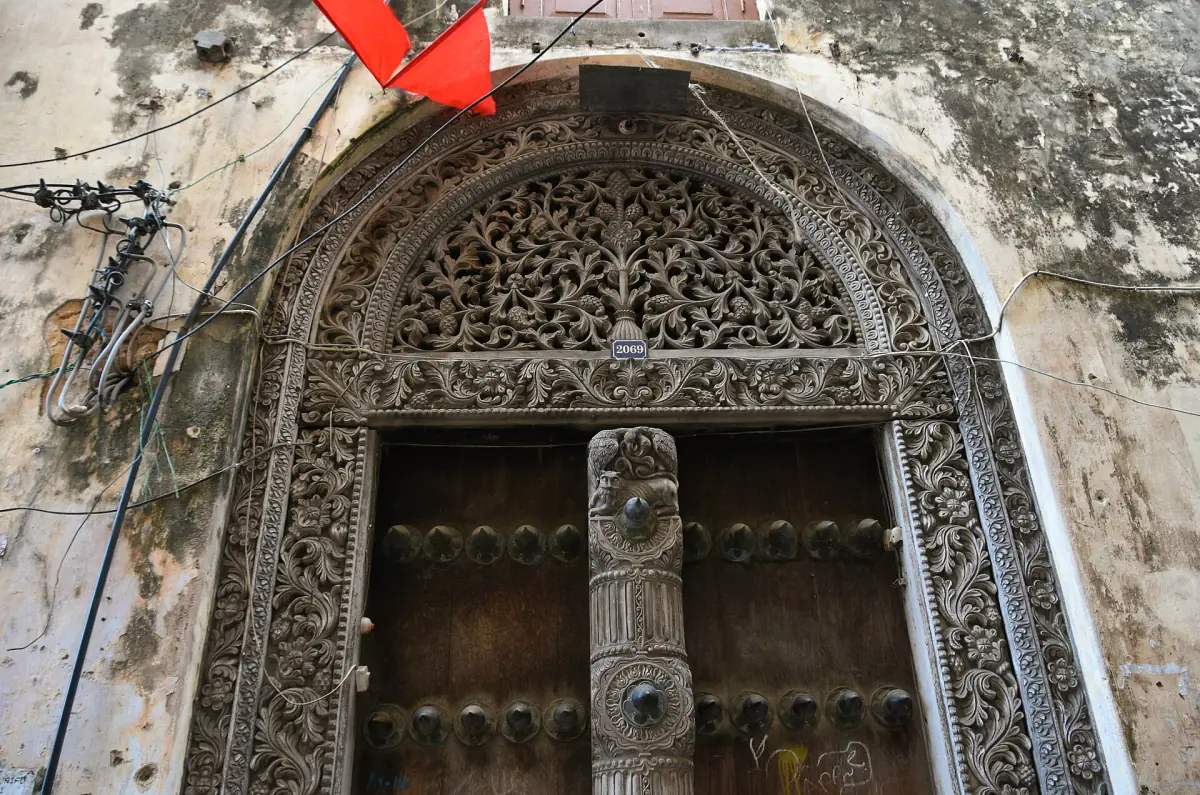
Zanzibar doors at a glance
Walk a few lanes in Mji Mkongwe, the old town, and you will pass carved wooden doors every few steps. Zanzibar doors are part of what gives Stone Town its character, and they are one reason the historic centre is on the World Heritage list. The old town was built from coral rag stone and mangrove timber, set in lime mortar and finished with lime plaster. Courtyards and heavily carved double doors belong to that historic building style.
The doors come in a few clear types, and once you know them you can read the street as you walk. This page explains the styles, the brass studs, the frames and the stories that go with them.
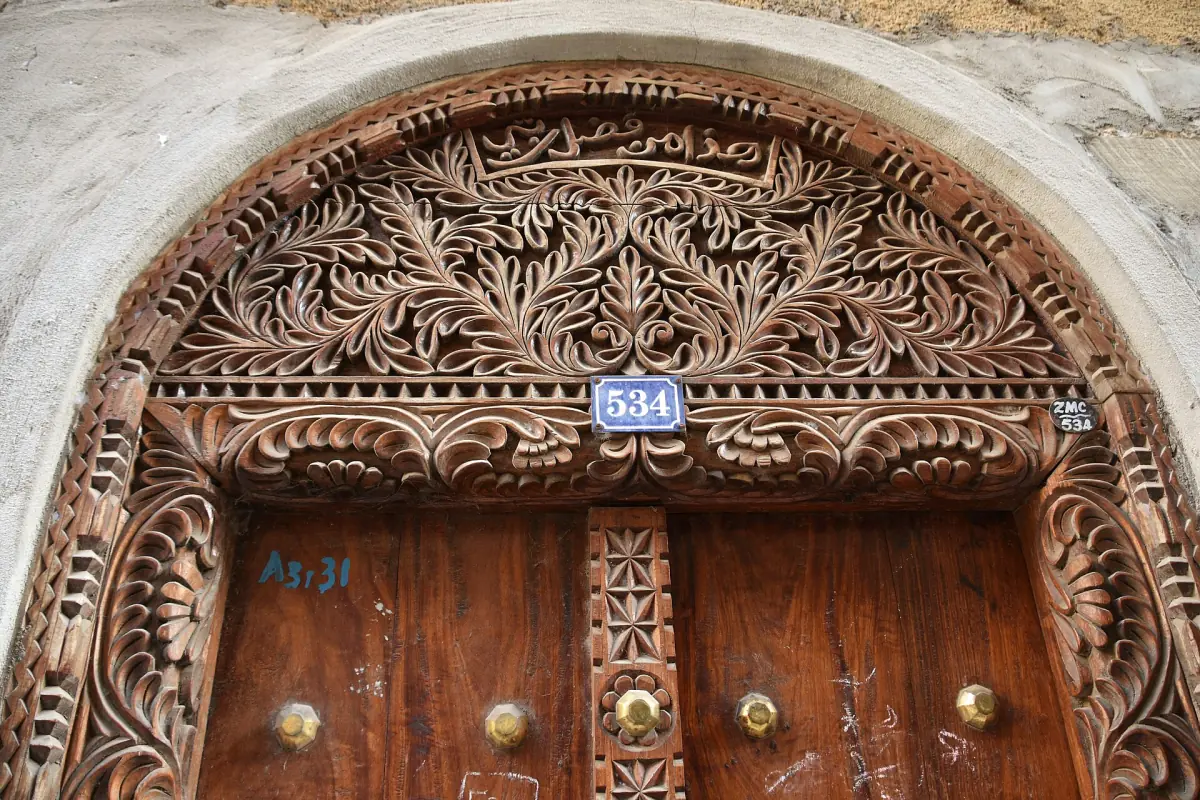
The two main door styles in Stone Town
One came with Omani house builders, the other with merchants from Gujarat.
Omani doors on large houses
The big, solid houses of the old town show Omani influence, and their entrances are often square, deeply carved doors. These are the doors you see on grand townhouses with thick walls and an entrance wide enough for a family and its goods.
Gujarat doors on shop houses
Narrow shop houses come from the tradition of Indian merchants. Their doors are often folding doors that open the whole front of the shop to the street. Look for them along busy lanes where trade has always happened.
Richly framed "Arab" doors
Some doors have a heavily carved frame with a central post, and a few carry Arabic inscriptions. Later doors often have a half-round frame. That shape does not tell you who built the house, so it is not safe to assign every door to one community.
| Feature | Omani door | Gujarat door |
|---|---|---|
| Where you see it | Large, solid houses | Narrow shop houses |
| Shape | Square, carved | Folding, opens the shop front |
| Tradition | Omani building style | Indian merchant tradition |
For most visitors the easiest way to learn the difference is to walk slowly through the lanes behind the waterfront and compare a big house entrance with a shop front. The two types often stand a few steps apart.
Our pick: a walk past the carved doors
This day trip starts with a guided walk through the old town, past the doors.
Hand-picked tours, booked through GetYourGuide. Prices are indicative starting prices in US dollars (as of October 2026). Tap a tour for live availability and the current price in your currency.
Stone Town walking tours and day trips
Guided walks through the old town, Prison Island, spice farms and sandbank trips from Stone Town, with live prices and availability.
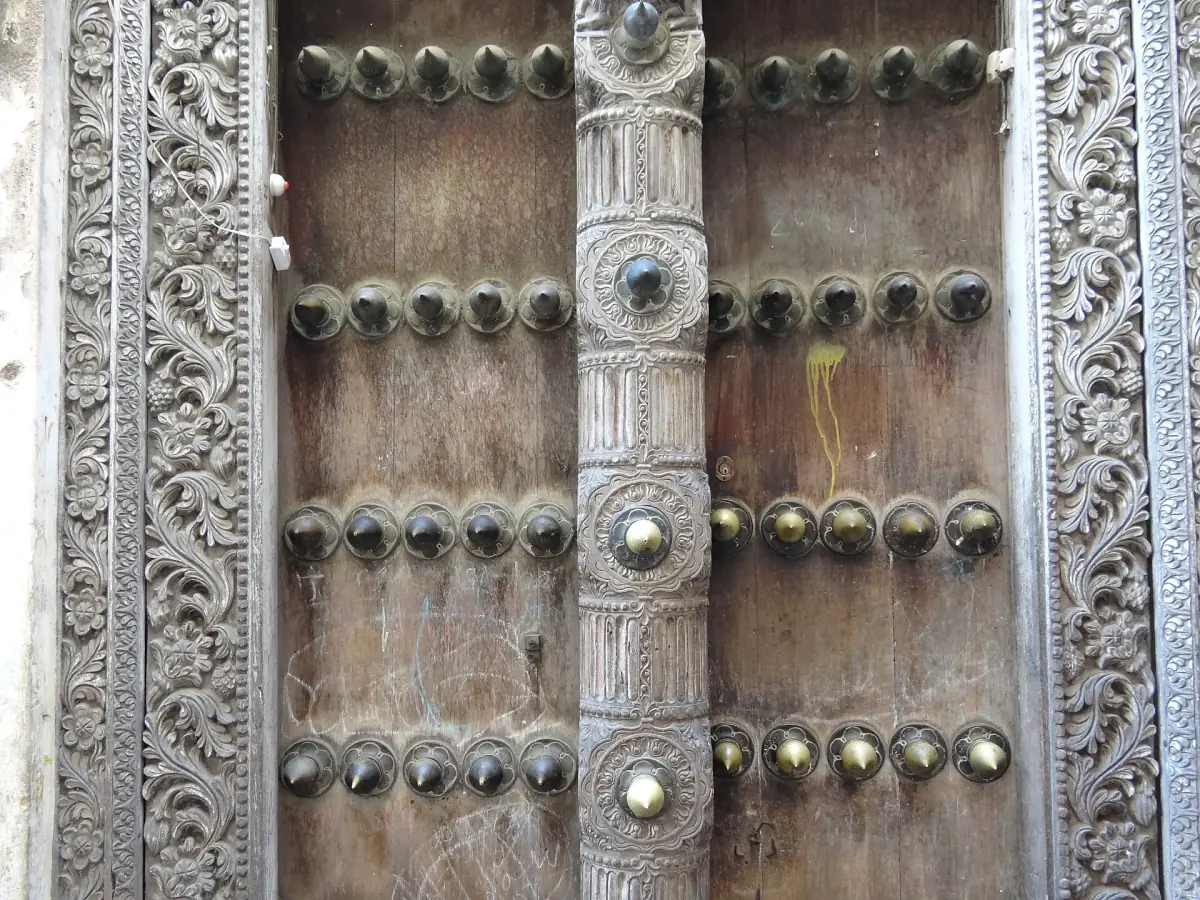
Brass studs and the elephant story
Many carved doors carry rows of pointed brass studs. The tradition behind them comes from India, and in Zanzibar they were used as decoration and as a sign of the owner's wealth.
You will often hear that the spikes were meant to stop elephants from breaking down the doors. That is the story passed on about where the style began. It is not a proven function in Stone Town, where nobody had to defend a door against an elephant. Enjoy the story, but treat it as the origin of a design, not as a reason the studs exist here.
The studs are also a good clue when you try to look at a door for details. Check whether they are neat rows or a pattern, and whether the door is old and dark or recently repainted.
What the carvings mean
Chains, flowers, fish and lines of text turn up on many Zanzibar doors, and guides and guidebooks offer a meaning for each. There is no fixed, standard meaning for every motif. The same pattern can mean something different in a different house.
- Do not date a door by its pattern. A single motif is not a reliable guide to a door's age.
- Do not read religion from the carving. A motif does not show the faith of the people who live inside.
- Inscriptions are a different matter. Where a door carries Arabic writing, a local guide can read it for you.
How many doors are left? An inventory from the 1980s counted around 800 carved doors in the old town. Treat that as a historical figure, not as today's count.
How to see the doors on foot
The doors are on private homes and working shops, so the best way to see them is slowly and politely. Most of the lanes in the old town are narrow and unmarked, and it is easy to lose your bearings. A phone map helps, and so does a guide who knows which streets are worth the detour. A route through the old town of two to three hours can pass the waterfront, the old fort, the former slave market and the market area, with plenty of doors on the way.
- Go early or late. The light is softer, the lanes are cooler and the doors are easier to photograph without people in front.
- Ask before you photograph a person. A door is fine to photograph from the street, but ask first if someone is sitting in front of it.
- Do not lean on or touch carved wood. The doors are old, and many are in use every day.
- Dress modestly. Stone Town is a conservative place outside the resorts, and covered shoulders and knees are the polite choice.
If you want to add a door walk to a day in town, look at the Stone Town walking tours page. A guide can explain the styles as you pass them, which helps more than a sign could.
Where doors meet the rest of Stone Town
Doors are the start of a longer walk. These pages pick up the other sights.
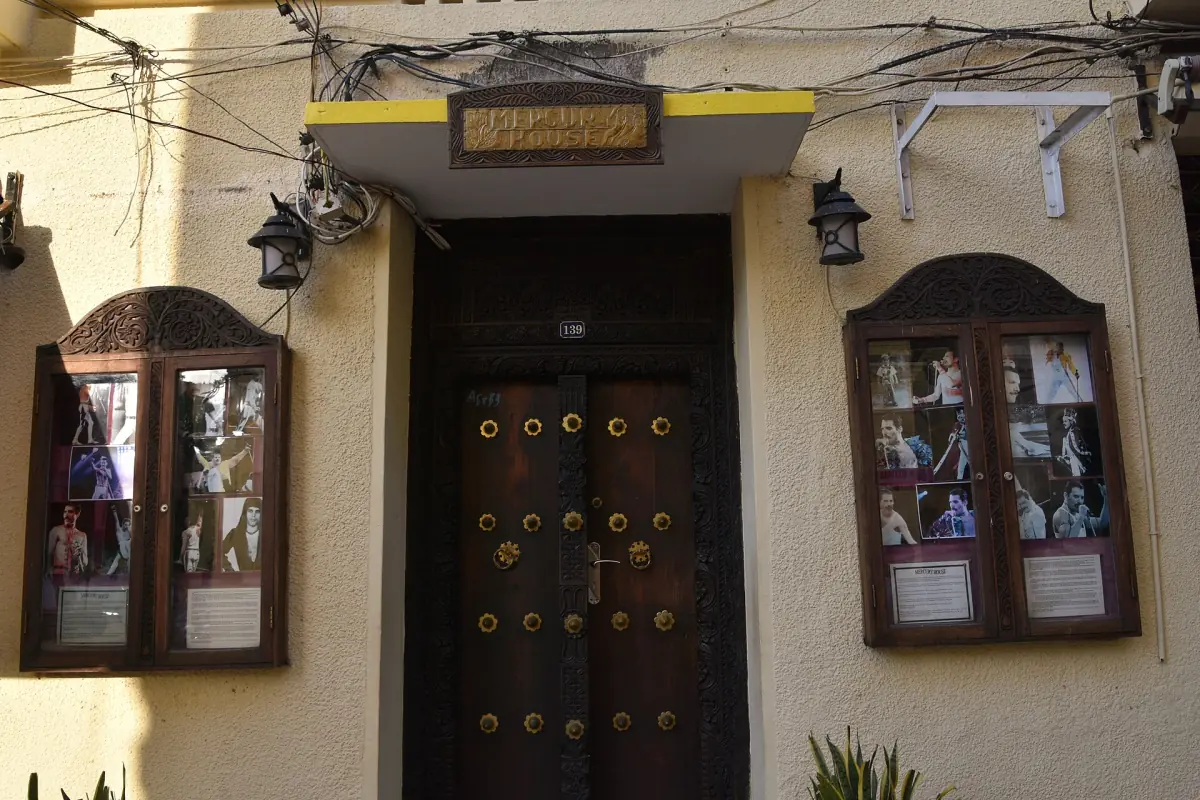
Freddie Mercury Museum
A dark carved door with lanterns marks the entrance in Shangani Street.
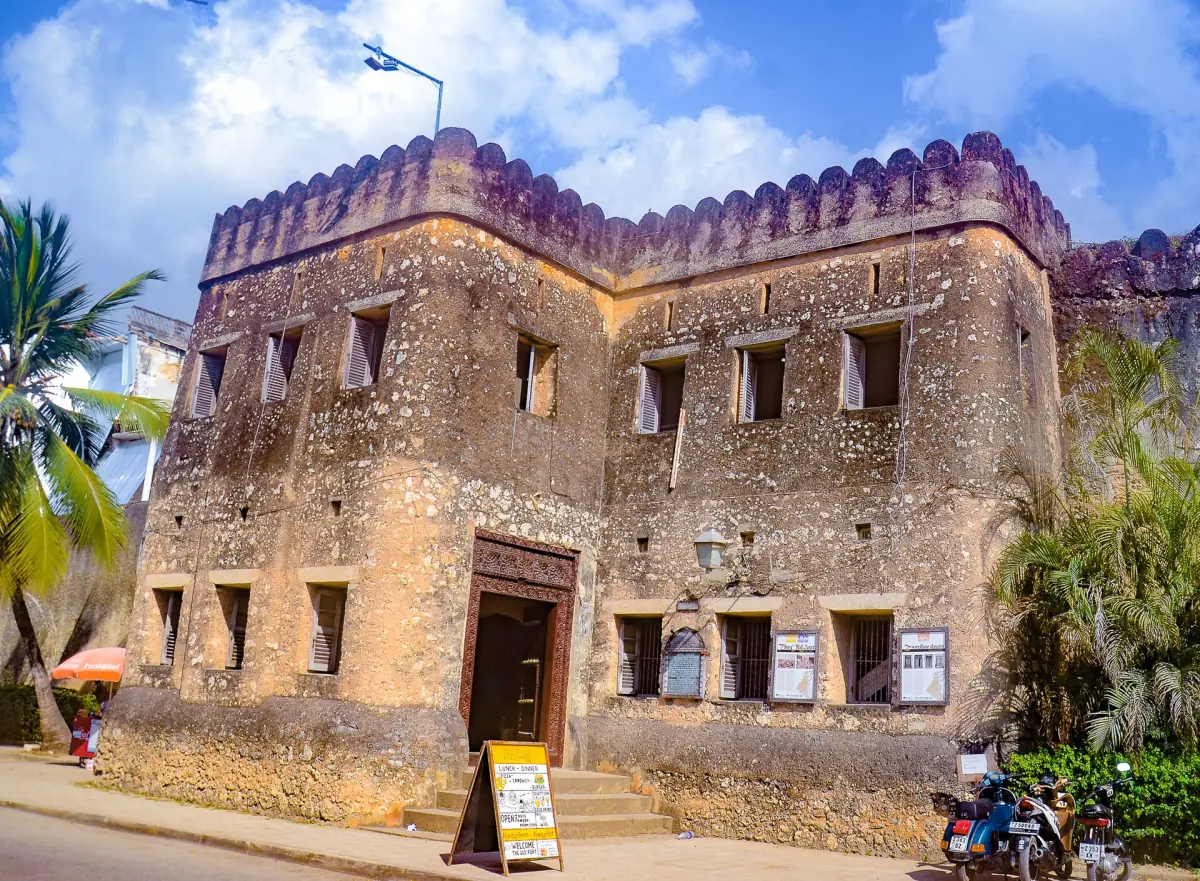
The Old Fort
Ngome Kongwe, the stone fort beside Forodhani Gardens.
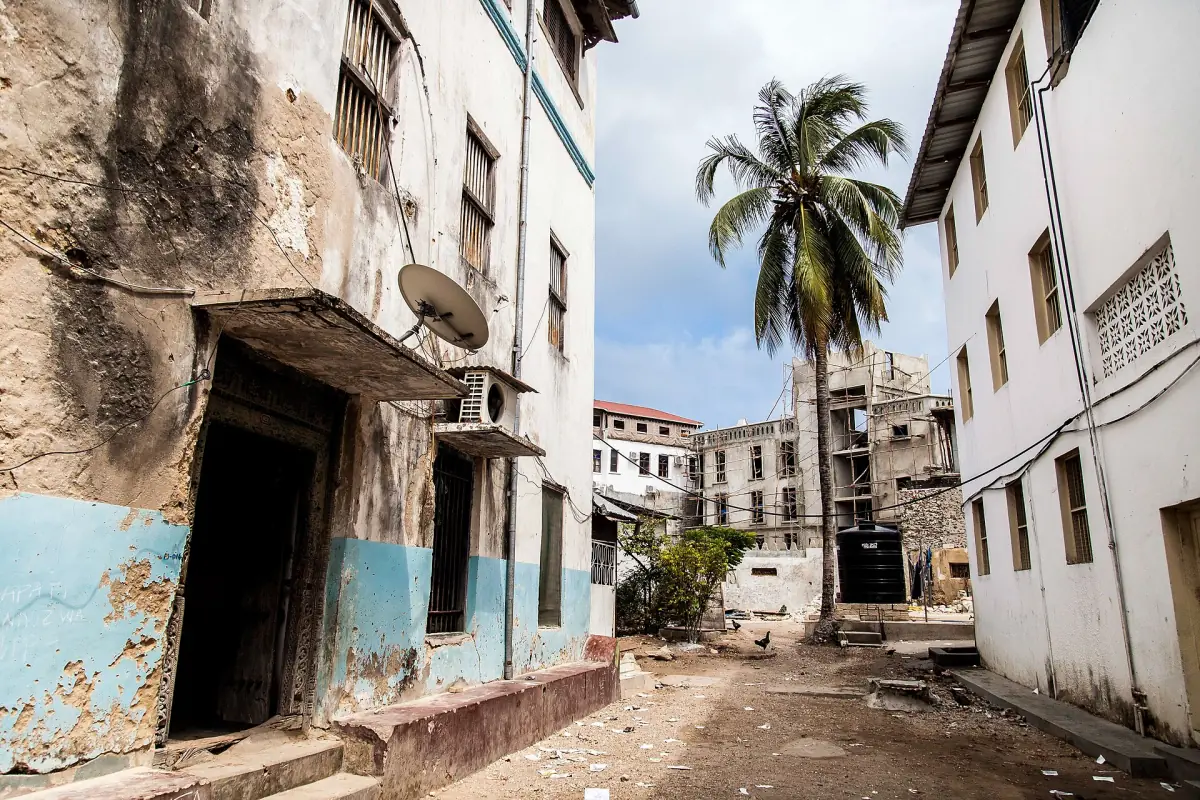
Things to do in Stone Town
Markets, museums and the lanes themselves.
For the story of the people who built these houses, see the history of Stone Town.
Zanzibar doors: frequently asked questions
What are Zanzibar doors?
They are the carved wooden doors of Stone Town, the old town of Zanzibar City. They are part of the historic building style, which also includes coral stone walls, lime plaster and courtyards.
What is the difference between Omani and Gujarat doors?
Omani doors are square, carved doors on large, solid houses. Gujarat doors come from Indian merchants and are often folding doors on narrow shop houses.
Why do the doors have brass studs?
The studs come from an Indian tradition and were used as decoration and a sign of wealth. The story that they kept elephants out is the passed-on explanation of the style's origin, not a proven function in Stone Town.
How many carved doors are there?
An inventory from the 1980s counted about 800. That is a historical number, so do not take it as today's count.
Can I take photos of the doors?
Yes, from the street. The doors belong to homes and shops, so do not block an entrance, and ask first if a person is in the picture.