Stone Town hotels: what to expect
Stone Town is not a resort district. It is a lived-in, commercial historic town, and the places to sleep reflect that. Many hotels and guesthouses occupy old houses in the lanes, others stand on the waterfront, and a number are built around a courtyard. The old town is compact, so most sights, markets and restaurants are within walking distance of wherever you stay.
That is the main appeal and also the main thing to plan for. Lanes are narrow, some cannot be reached by car, and each building is different. Stone Town hotels are best chosen by location and building type, not by a star rating. This page shows you how to choose an area and which questions to ask the host.
Where to stay in Stone Town
Four parts of the old town, each near a different landmark.
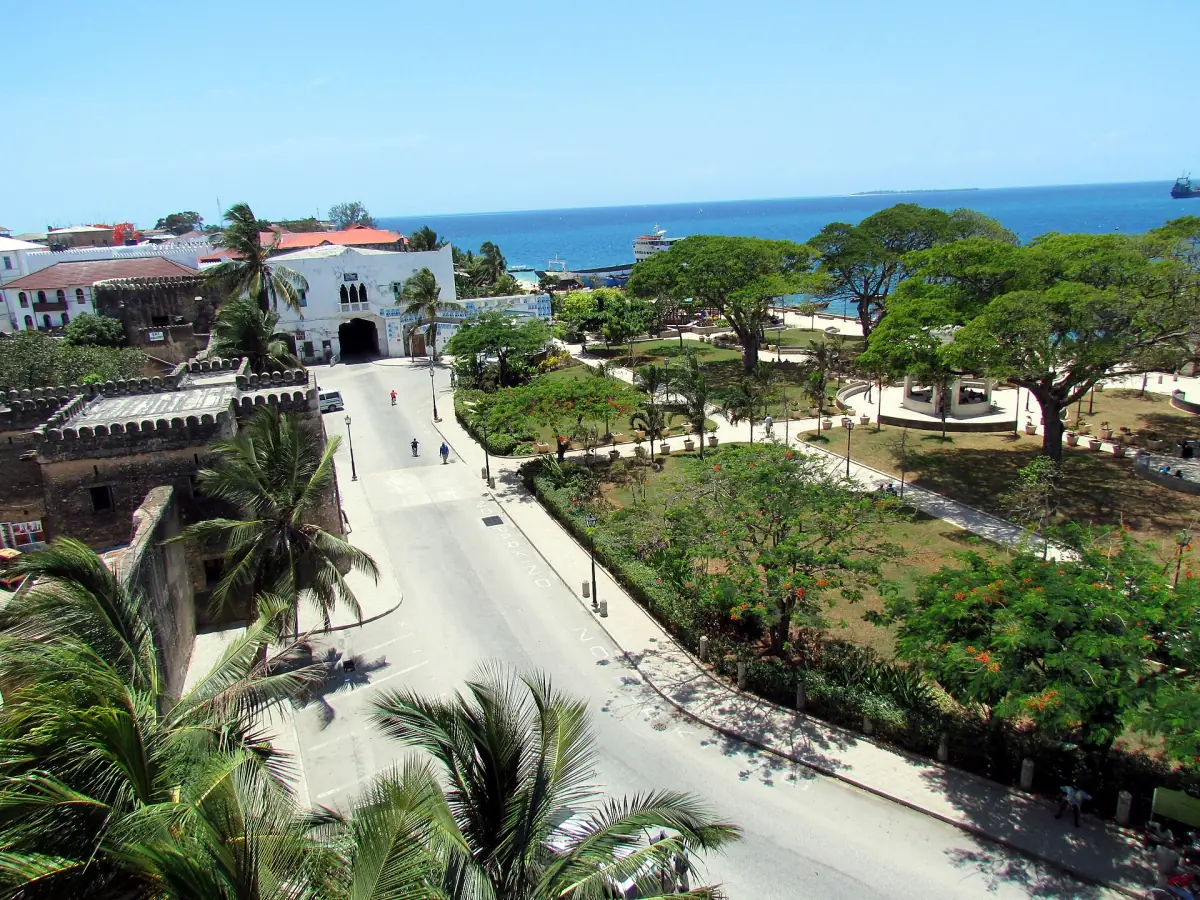
Near Forodhani Gardens and the waterfront
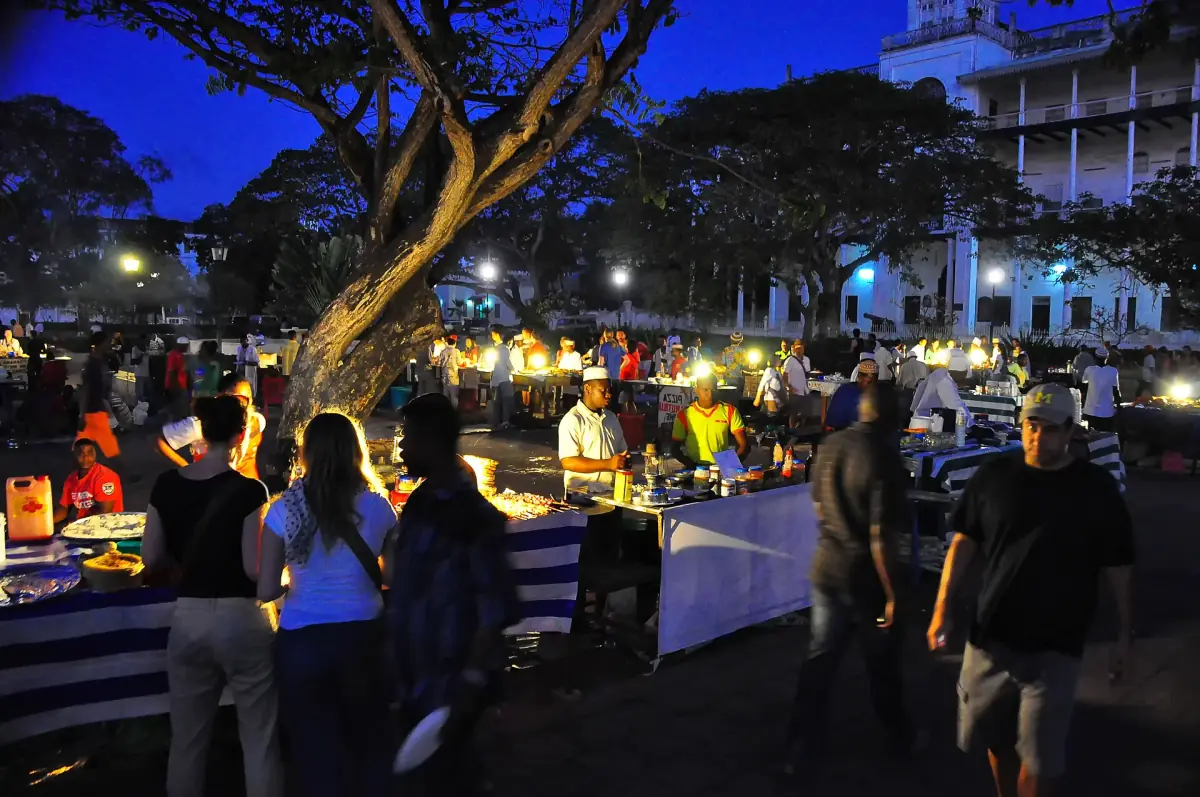
This is the area for sea views, the evening food stalls and a walk along the old cannons at sunset. You are close to the Old Fort and the House of Wonders. Evenings are lively around the gardens, which is a plus if you want to eat out and a point to consider if you sleep lightly.
Forodhani Gardens →Shangani
Shangani is the part of the old town where the Freddie Mercury Museum stands, in Shangani Street. It is a good base if you want to walk to the waterfront, restaurants and the museum without crossing the whole town.
Freddie Mercury Museum →Near Malindi and the ferry port
The ferry from Dar es Salaam arrives at Malindi Port on the edge of the old town. Staying nearby makes arrival and departure easy, especially with heavy bags or an early boat.
The ferry from Dar es Salaam →Near Darajani
Darajani is the market district, busy and loud by day. You are in the middle of everyday Stone Town here, close to the bazaar and its fruit, fish and spice stalls.
Darajani Market →Stone Town tours and day trips
Walking tours, Prison Island, spice farms and sandbank trips from Stone Town, with live prices and availability.
Building types: courtyard, lane and waterfront
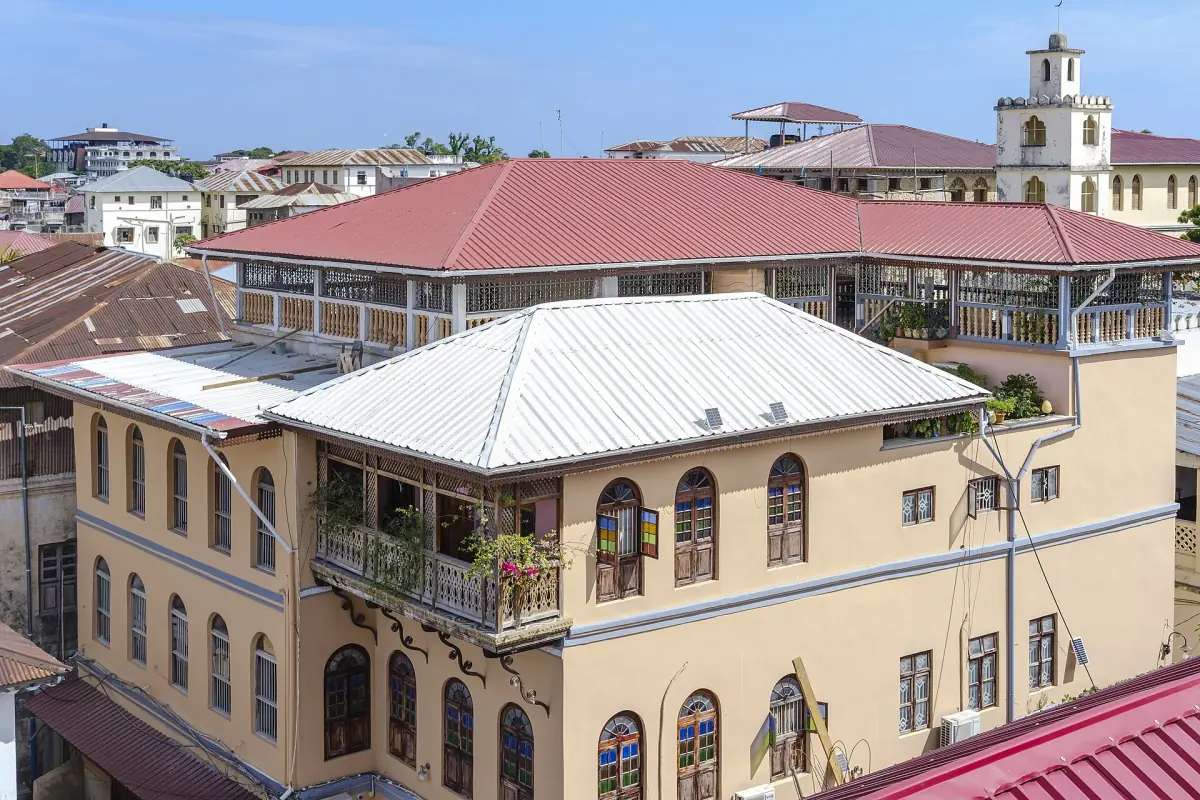
The old town grew over centuries, and its buildings differ. The historic style uses coral rag stone, mangrove timber and lime plaster, with inner courtyards and carved doors. A place that calls itself a hotel here may be a former merchant house, a narrow townhouse or a larger building on the shore.
- Courtyard houses are built around an open inner space, which gives light and some quiet from the lane.
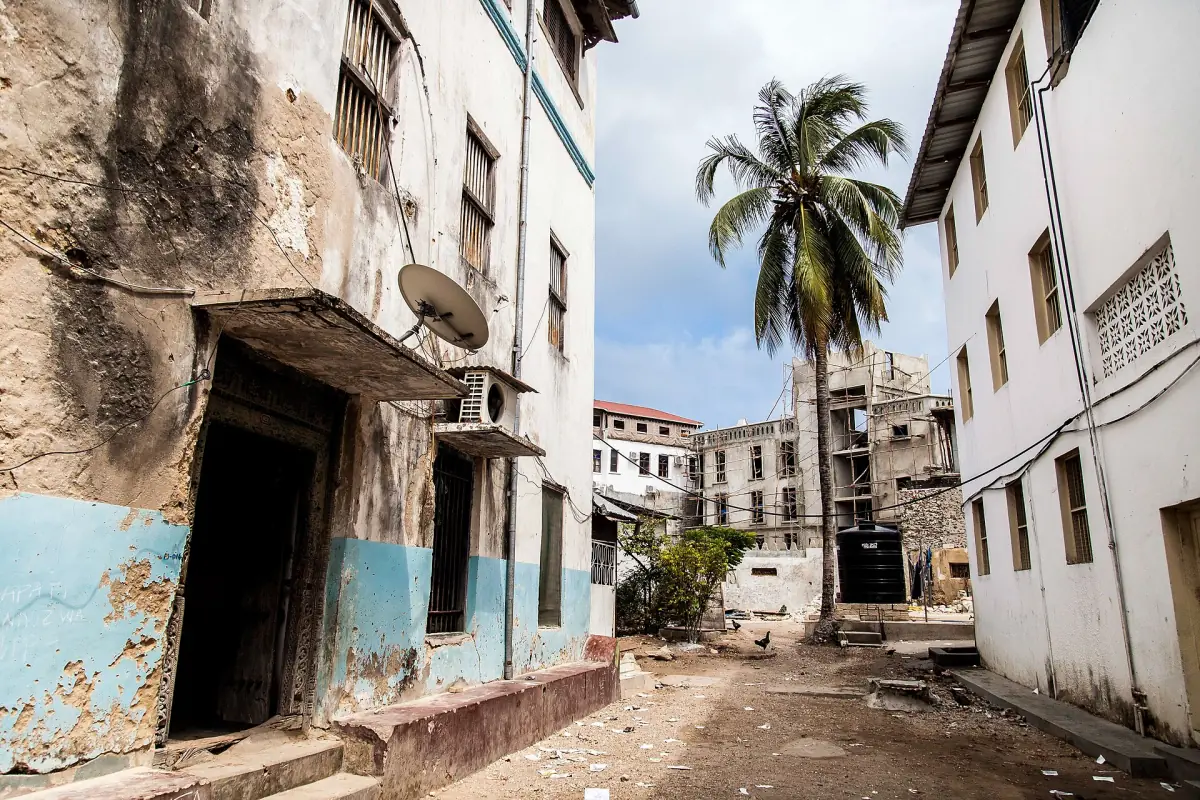
- Lane houses have plenty of atmosphere and are often hard to reach with a car.
- Waterfront buildings face the sea and the gardens, with more open views and more evening activity nearby.
The carved doors you pass on the way in are part of that heritage. Our guide to the carved doors of Stone Town shows what to look for.
Getting to your Stone Town hotel
Do not expect a taxi to stop at every door. In the old town, some lanes are too narrow for cars, so you may have to walk the last stretch with your bags. The airport bus ends at Kijangwani, and there is no direct stop at individual hotels, so plan a short walk or a short ride from there. For the full options from the airport, see the guide from Zanzibar Airport to Stone Town.
If you arrive by sea, the ferry lands at Malindi Port, on the edge of the old town, so you can often reach a nearby stay on foot. Ask your host for the best drop-off point and a simple route, ideally with a landmark you can find on a map.
- Send your host your arrival time, and ask whether someone can meet you at the nearest road.
- Pack light if you stay in a lane house, because the walk may include steps.
- Keep your phone charged. Lanes look similar, and a map saves time in the dark.
What to ask before you book
Rooms, prices and facilities vary from one Stone Town property to the next, and a listing rarely shows everything. These questions give you a clearer picture:
- Stairs and lifts: Is there a lift, and how many flights lead to the room?
- Noise: Does the room face the lane, the courtyard or the street? Is there a mosque or market nearby?
- Sea view: If a view matters, ask for a photo from the room, not from the roof.
- Taxes and fees: Which taxes and fees come on top of the room rate?
- Parking: If you rent a car, ask where it can be left. Do not assume that the property has parking.
- Check-in: What time can you arrive, and how do you find the entrance?
If you prefer a beach stay and want Stone Town only for day trips, the beach areas are covered in the island guide, see Zanzibar hotels. Many travelers combine a few nights in the old town with a beach stay on the coast.
Plan the rest of your stay
Pick a base, then fill the days.

Stone Town hotels: frequently asked questions
Which area should I stay in?
It depends on your trip. The waterfront near Forodhani suits evenings and sea views, Shangani is a good base for restaurants and the Freddie Mercury Museum, the area near Malindi suits ferry arrivals, and Darajani puts you in the middle of daily life.
Can a taxi take me to my hotel door?
Not always. Some lanes in the old town are too narrow for cars, so you may walk the last part. Ask your host for the best drop-off point.
Does the airport bus stop at my hotel?
No. The airport bus ends at Kijangwani and does not stop at individual hotels. Plan a short walk or ride from there.
Is Stone Town a good base for Zanzibar?
For culture, markets, food and the Prison Island and sandbank trips, yes. For long beach days, many visitors add a stay on the coast.
What should I ask before booking?
Ask about stairs and lifts, noise from the lane or a mosque, the view, taxes and fees, parking and the check-in time. A photo from the room itself helps if a sea view matters.