
Stone Town weather at a glance
Zanzibar sits just south of the equator, so Stone Town is warm in every month. What changes is the rain. Unguja, the main island, has two rainy periods: the long rains, called Masika, from March to May, and the short rains, called Vuli, from October to December. January and February are relatively dry, and June to September is the drier phase of the year.
The monthly figures below are averages for the weather station at Zanzibar Airport (6.22° S, 39.22° E, 15 m above sea level), covering 1991 to 2020. They describe a typical month, not a forecast for your dates, and no month guarantees dry weather. Use them to compare seasons, then check the forecast a few days before you go.

Stone Town climate by month
Average daily high and low in degrees Celsius and monthly rainfall in millimetres, 1991 to 2020.
| Month | High (°C) | Low (°C) | Rain (mm) |
|---|---|---|---|
| January | 32.6 | 24.5 | 73.6 |
| February | 33.2 | 24.3 | 50.8 |
| March | 32.5 | 24.5 | 176.9 |
| April | 30.6 | 24.5 | 408.5 |
| May | 29.7 | 23.8 | 297.8 |
| June | 29.3 | 22.9 | 51.9 |
| July | 29.0 | 22.1 | 30.8 |
| August | 29.4 | 21.1 | 37.7 |
| September | 30.4 | 21.0 | 36.8 |
| October | 31.2 | 22.0 | 115.7 |
| November | 31.0 | 23.1 | 201.3 |
| December | 31.8 | 24.0 | 167.7 |
These are averages of daily highs and lows and monthly rainfall totals, not records. A single day can be much hotter, cooler or wetter than the average. For most visitors, the practical reading is simple: April and May bring the most rain, July to September bring the least, and the nights are coolest from August to September.
Our pick: a sunset cruise
Evenings on the water are one way to enjoy the town after a hot day.
Hand-picked tours, booked through GetYourGuide. Prices are indicative starting prices in US dollars (as of October 2026). Tap a tour for live availability and the current price in your currency.
Stone Town tours and boat trips
Walking tours, Prison Island, spice farms and sandbank trips from Stone Town, with live prices and availability.
Best time to visit Stone Town
The best time depends on what you want from the trip, and no month is free of risk. The seasons give you a framework, not a promise.
- June to September: the drier phase. Rainfall is lowest, between about 31 and 52 millimetres a month, and highs stay near 29 to 30 degrees. This is the easiest period for long days on foot and for boat trips.
- January and February: relatively dry and the hottest weeks, with highs above 32 degrees. Good if you want heat and sun, and a point to plan around for walking in the middle of the day.
- October to December: the short rains. Showers are more common, and the rainfall averages rise from about 116 millimetres in October to about 201 millimetres in November. For October to December 2026, above-average rain is expected in parts of Tanzania, so leave some room in your plans.
- March to May: the long rains. April is the wettest month on average with 408.5 millimetres. Sandbank and island trips depend on the sea, so expect more changes in this period.
You can find the wider picture for the island, including the beaches, in the best time to visit Zanzibar. This page stays with the old town.
What the weather means for your plans
Stone Town is a walking town, and it is hot. In the warmest months, plan a morning walk and an afternoon break, and bring water, sun protection and a hat. The waterfront and the sights around the fort are open to the sun.
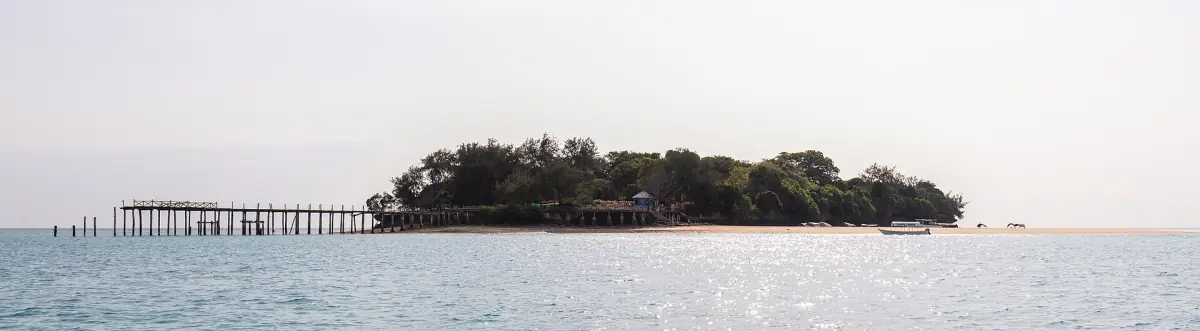
Rain changes the day more than the temperature does. A covered stop, such as a market hall or a café, makes a good plan B when a shower comes in. If you are at sea, the weather matters more. Boat trips to Prison Island and the Nakupenda sandbank depend on the sea and the tides. A calm morning does not guarantee a calm afternoon, so ask the operator about the conditions and leave a spare day if you can.
Clothing follows the season and the local customs. Light, loose clothes that cover shoulders and knees are comfortable in the heat and polite in the old town.

Packing for Stone Town weather
- All year: light clothes, a hat, sun cream and a refillable bottle.
- Rainy months: a light rain jacket or a small umbrella and sandals that dry quickly.
- Boat days: a dry bag for your phone and a second shirt. Sun and spray can surprise you on the water.
- Evenings: a light layer. The nights are cooler than the days, though not cold.
Looking for the next step in your trip? The pages on the Prison Island boat trip and the Nakupenda sandbank explain what the sea means for those days.
Plan around the season
Pick the sights that suit the weather.


Stone Town weather: frequently asked questions
What is the best month to visit Stone Town?
For the least rain, June to September is the drier phase. January and February are relatively dry and hot. No month guarantees dry weather.
When is the rainy season?
The long rains (Masika) run from March to May, and the short rains (Vuli) from October to December. April is the wettest month on average.
How hot does Stone Town get?
The average daily high ranges from 29.0 °C in July to 33.2 °C in February. The average low ranges from 21.0 °C in September to 24.5 °C in several months.
Is Stone Town weather good for boat trips?
The drier months are more likely to give calm days, but the sea can change in any month. Ask the operator about conditions on the day.
Can I rely on these figures for my dates?
No. They are averages for 1991 to 2020, not a forecast. Check a current forecast a few days before you travel.